Showing posts with label Laos. Show all posts

Thursday, 27 November 2014

10 Weekend Treehouse Getaways From Singapore Around Southeast Asia

Ever gotten so inspired by ‘Tarzan and Jane’ and ‘George in the Jungle’ when you were much younger, that all you wanted to do was strip to your bare minimums and swing on the hammock extended from your personal treehouse? Well, at some point of time, we all had that as our childhood dreams.

While you let that dream fades back into time and be disappointed, take a look at these beautiful tree houses around Southeast Asia where you can let your dream become a reality over the weekends.

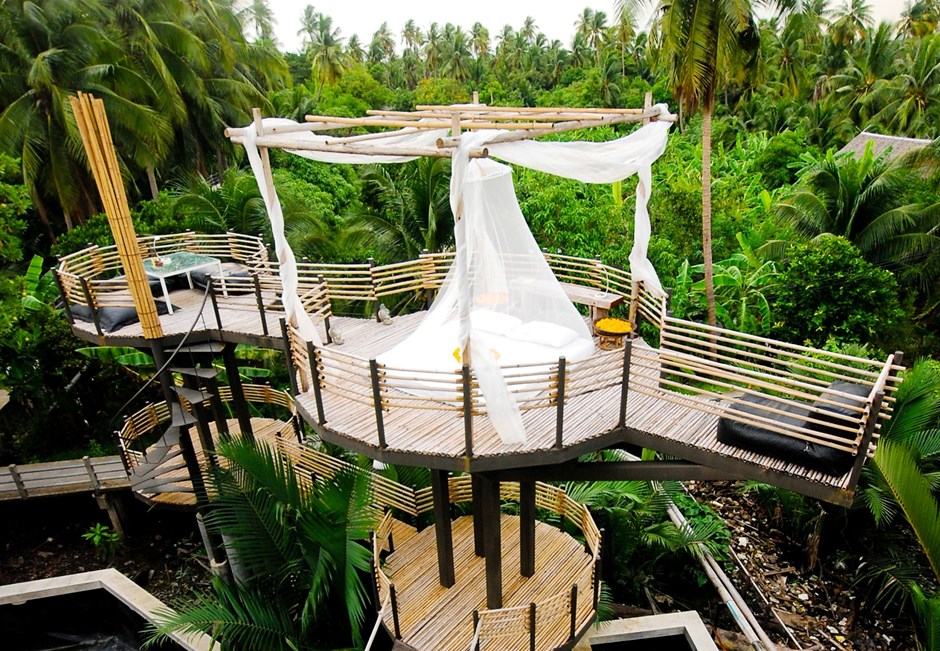
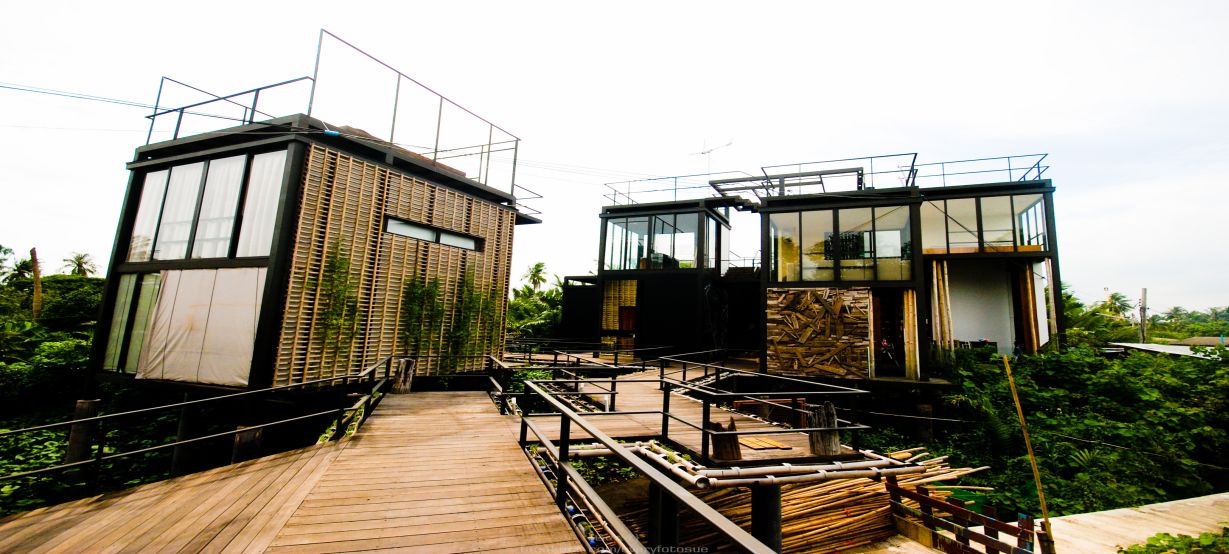
Bangkok Tree House Hotel, Samut Prakarn, Thailand
bangkoktreehouse1.jpg

bangkoktreehouse.jpg

Think: Opportunity to connect with nature and provide an escape from the bustling heart of the city.

This environmentally friendly and uniquely designed hotel is only accessible by foot or boat. There are 11 cosy nests with picturesque view over the river, outdoor showers, and natural pond; a haven for nature lovers. One of the room options includes an open air bedroom, romantically surrounded by palm trees swaying with the rhythm of breezes, raised on a bamboo platform; you can fall asleep under the guardian stars. To cater to different preferences, you can choose from Treetop nest, Bee Hive, View with a Room, Family Nest, or River Nest (depending on tidal season).

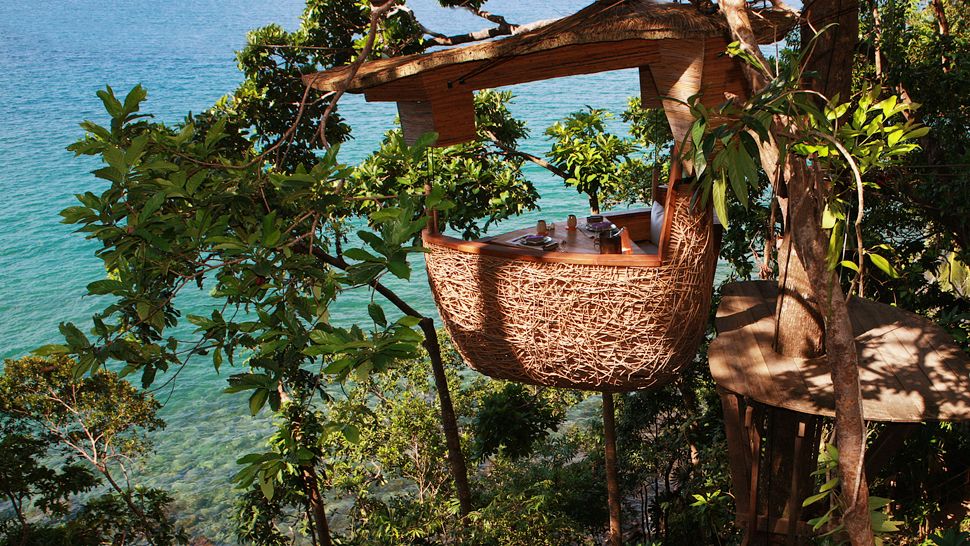
Sovena Kiri Resort, Ko Kood, Thailand
sonevathailand.jpg

diningpodsovena.jpg

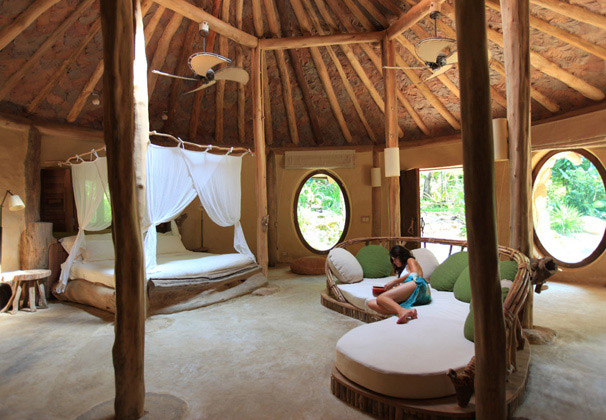
On this 150 acres of beach and tropical rainforest where hues of blues meet the shades of greens, a dream destination for eco-friendlies. Featuring 42 resort villas and 21 private residences, the main attraction of this resort located in the remote Thai island of Kood is its dining experience. Though not all rooms are perched on a tree, you will be overwhelmed with a meal 16 ft off the ground, with a flying waiter serving all your food via a zip line.

The Gibbon Experience in the Jungle of Bokeo, Bokeo Province, Laos
gibbonlaos.jpg

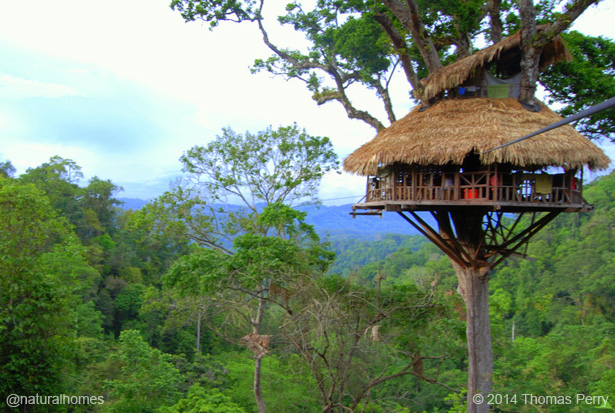
A forest enclave hidden in Bokeo province of Northern Laos, this conservation project aims to preserve the Nature Reserve and protect its inhabitants. Guests live and sleep in the jungle canopy, only accessible by a network of zip lines; and wake up to the deep forest mist.

Though food and accommodation facilities are basic, you will be awed by the wonders of the nature - the wildlife and serenity as you gaze out from your cabin.

Laiya Coco Grove Resort, Batangas, the Philippines
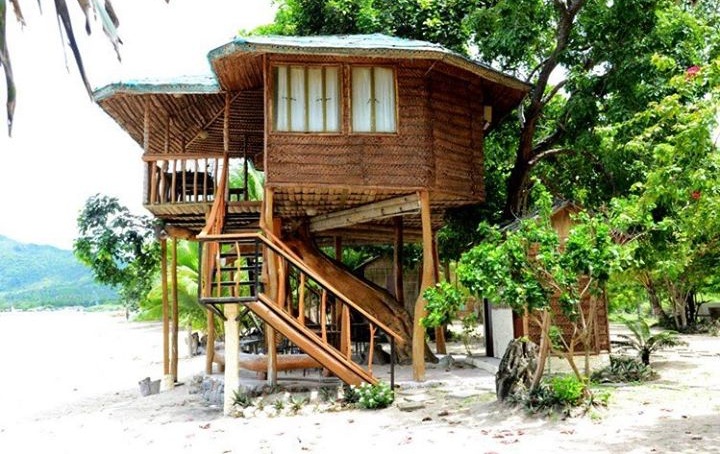
Laiya Coco Grove Resort Philippines.jpg

Located in the municipality of San Juan, Sigayan Bay has 6 kilometres of beach and water frontage with preserved mangroves. Each tree house is unique with its own character, having varying designs that are dependent on the host tree. While you seek shady refuge in your covered patio, you can gaze out to the sandy beach against the mighty mountains while you drift in and out of your siesta.

Hang Nga’s Treehouse hotel, Da Lat, Vietnam
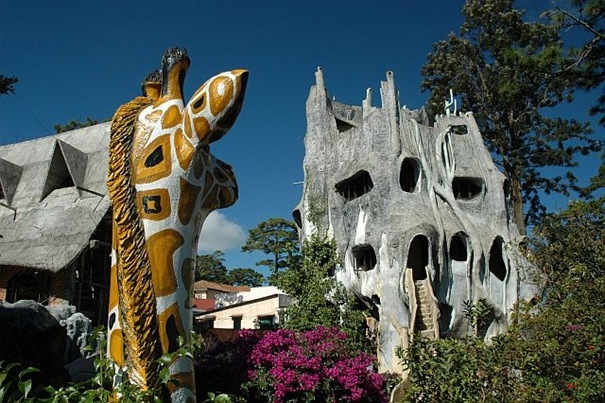
hangnga.jpg

Also known as Crazy House, the Hang Nga’s Guesthouse was opened in 1990 in Da Lat - the brainchild of architect Dang Viet Nga. Unlike the usual tree houses that sit on trees, this tree house is literally a house in the tree. Its uneven windows and tunnel shaped stairways has it crowned the ‘fairytale house’. There are 10 themed guest rooms such as Tiger Room, Eagle Room, Kangaroo Room, Ant Room, each with matching handicrafted furniture.

Not only an accommodation choice, there’s also a museum for visitors price at VND 200,000.

Sekeping Serendah, Kuala Lumpur, Malaysia
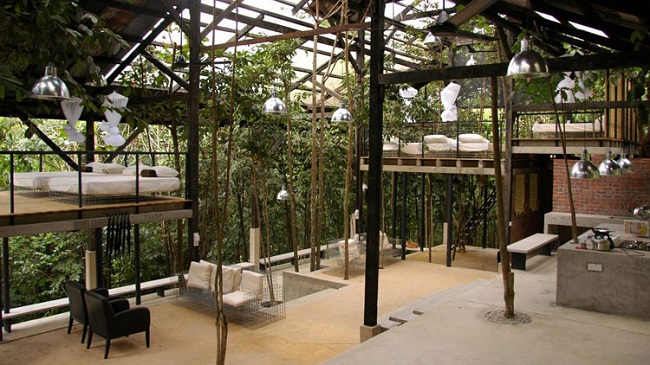
sekepingserendah.jpg

Tucked away in the lush rainforests 45 minutes outside of Kuala Lumpur, you will experience the meet between nature and modern architecture; finding peace and tranquility. The sheds are of open concept yet promising privacy between each shed. The different accommodation types - Glass Shed, Mud Shed, Warehouse, Timbre House - are suitable for big group gatherings, family getaways, or even romantic staycation. Be sure to book in advance, especially during the weekends.

Like any other tree houses, you will get to see all types of wildlife and insects. Also, check out Serendah Waterfall that is located near Sekeping Serendah. This is not a mere getaway that will rejuvenate nature lovers, but also an inspiration for interior designers.

Bunga Raya Hotel, Sabah, Malaysia
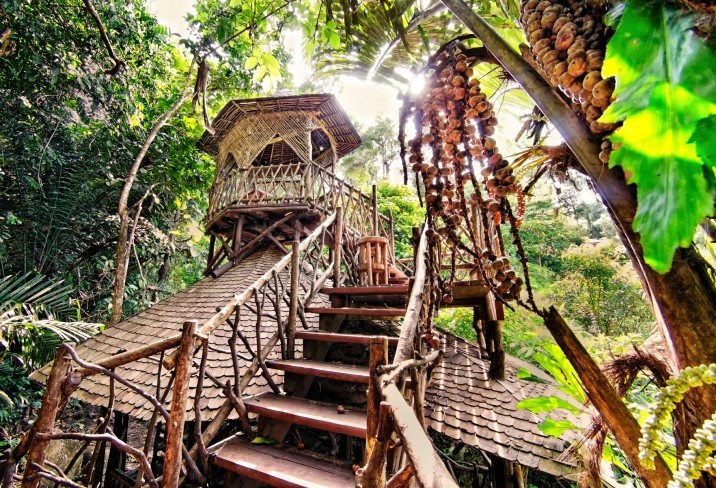
bungaraya.jpg

bungaraya.jpg

A secluded island enclave of simple luxury, the timbered resort is situated on a obscured bay with white sand beach on one side and century-old virgin jungle on the other.

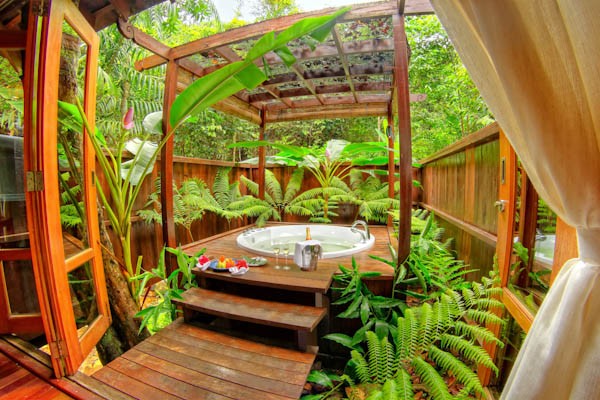
Reflecting the traditional simplicity of Borneo architecture, each villa is handcrafted by local tradesmen with locally source materials from the natural environment, accommodating the comforts and needs of all travellers. Your jungle hideaway experience is completed with an intimate outdoor jacuzzi and private jungle plunge pool.

Nature’s Lodge Sen Monorom, Mondulkiri, Cambodia
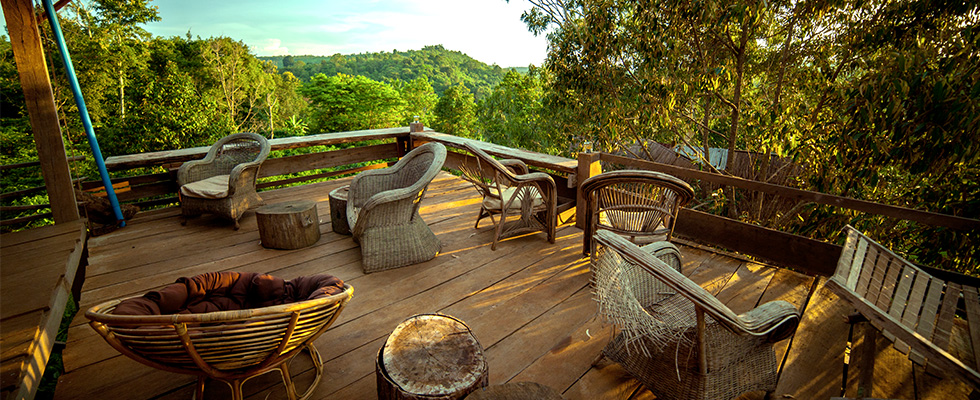
treelodgecambodia.jpg

Sitting atop the hillside overlooking the immense jungle, Nature’s Lodge offers 30 solid wood bungalows, boasting a balcony platform for communal dining and outdoor hammocks. Submerged in the natural land of finest views and misty hills of Mondulkiri highlands, you can spot Cambodia’s wildlife while sipping on local Mondulkiri coffee. Did I mention the romantic sunset scene?

Sharma Springs @ Green Village Bali, Ubud, Indonesia
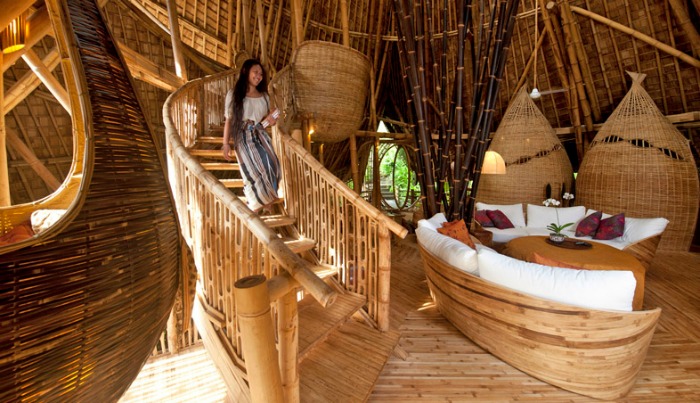
sharmasprings.jpg

You’ll be willingly trapped in this myriad of bamboos and begging not to leave after. 6 storey structure designed by architect Elora Hardy is made almost entirely of bamboo accompanied by furnitures made out of bamboos to complement the atmosphere, and houses a library and spa.

Set within a valley along the sacred Ayung River, this eco initiative blends in with its surrounding, not a blatant luxurious place in the Balinese village. Here, you can practise yoga with the morning sun.

Panchoran Retreat, Bali, Indonesia
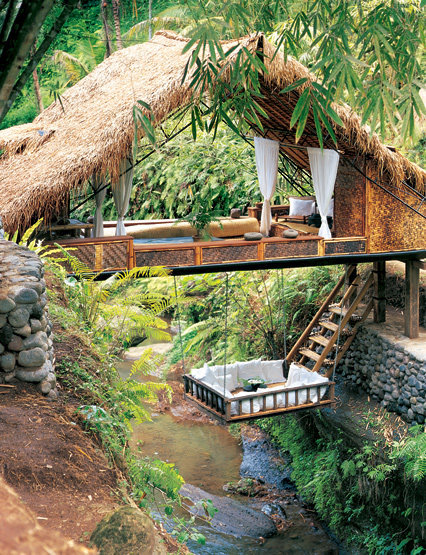
resort spa treehouse bali.jpg

A soothing sanctuary, a basic haven that relaxes your mind while you communicate with the nature. In Panchoran Retreat, there are 6 well spaced out forest retreats - Waterfall House, River House, Modern Waterfall House, Coconut House, Bamboo Garden House - made from recycled and sustainable materials, blurring the dichotomy between the natural exterior and man-made interior. Other zen-mode activities that you can indulge in are Yoga at the Pavilion and Bamboo Meditation.

For more travel tips, click here.

Friday, 24 October 2014

How to budget-travel across Southeast Asia on less than $50 a day

Cycle through the ancient structures of Angkor Complex, swing into the jade-green chill waters at Kwangsi Waterfalls, or get your skin caressed by the majestic sun as you lay on South Thailand’s beaches; travellers flock to this well-worn backpackers’ circuit, Southeast Asia, each year. Undoubtedly, the lower cost of living is one of the main reasons you have big haversacks in your face when travelling to popular destinations such as Phnom Penh,PhuketHo Chi Minh City, or Yangon.
Last winter, I jumped on the ‘cheap and independent travel’ bandwagon and bought myself a one-way ticket with a meagre S$1000 in my emaciated bank; after packing my obnoxious backpack that needed a lot of getting used to.
Though I came back 2 inches off my waist, many friends and like-minded travellers have been asking me how I spent 7 weeks on the road with less than S$1000. Here’s how:
1. Opt for midnight transportation to save on accommodation
sleepertrain.jpg
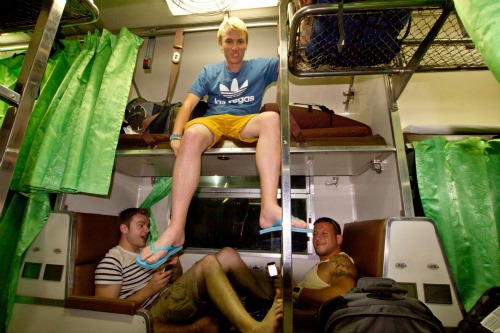
Southeast Asia has an extensive overland travel system; bus and rail. With the sleeper buses and sleeping cabins on the trains, fret not about waking up with a chronic backache.
Furthermore, you won’t spend the supposed time meant for city-exploration in the day staring out of trains’ windows. What’s more? Accommodation for the night is sorted.
2. Overland transportations > Air travel
An add-on to the aforementioned, overland travels in Southeast Asia is relatively safe – even for solo female travellers – and a more affordable alternative compared to air travel if you’re planning to linger in this region for a long period of time. You have the choice of dropping off at any station before reaching your pre-planned destination.
Another cost-saving advantage of overland travels is that bus terminals and train stations are usually located in the central area of the city compared to the airport. You can save on taxis or airport buses when getting to your accommodation.
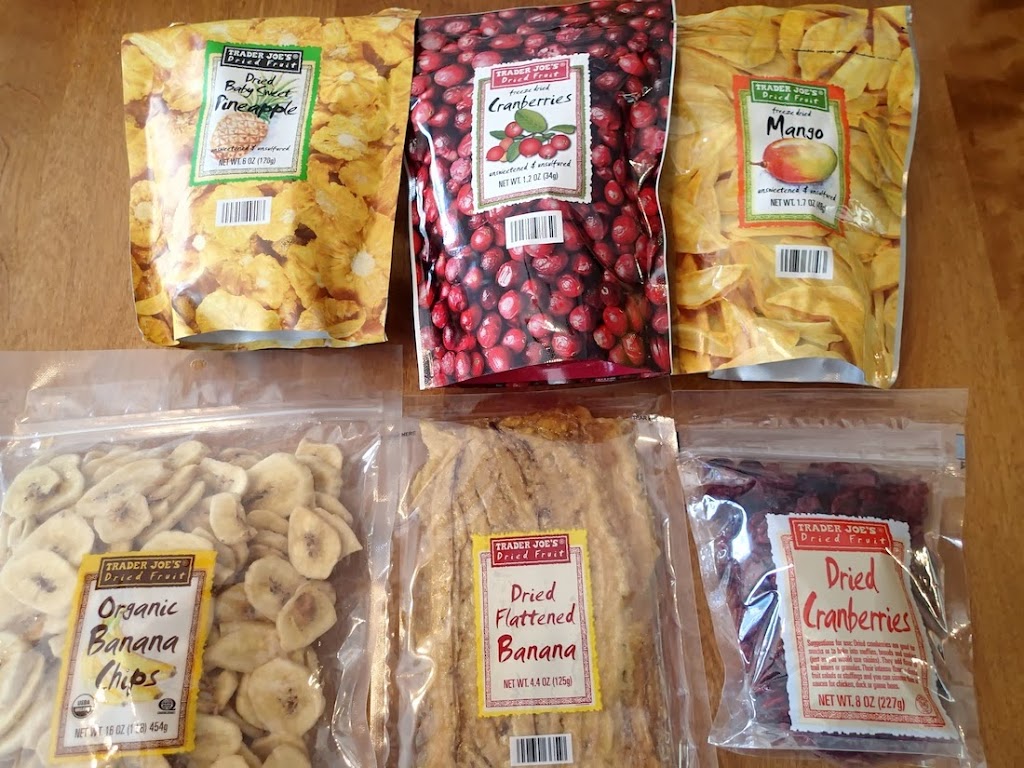
3. Pack dry food for long journeys
dryfood.jpg
Not only will these help you cut costs, they will be your life saviour. During long overland travels such as 28 hours bus ride from Luang Prabang to Hanoi City, I ran out of local currencies and could not dine at stopovers, let alone afford those rip-off snacks from the aunties’ hand carried baskets.
4. Couchsurf as much as possible
couchsurfing.jpg
Who says budget travelling would be a breeze by just saving on your massive lootings at night markets and taking cheaper, budget airlines? You’ll have to start doing work the minute you purchase your plane tickets.
Once you have a brief idea on the dates around the region, start sending requests on Couchsurfing to look for Couch Hosts! Do note that some hosts will only take in members with positive reviews; this means you’ll need some time in your local community by hosting others or bringing tourists around.
Couchsurfing is non-profit organisation for travellers to ‘surf on couches’ in a new city. Not only is this a brilliant way to save costs on accommodations, you experience cultural exchange! If you have time with your hosts, you can even get tips on how to travel the city and what to avoid.
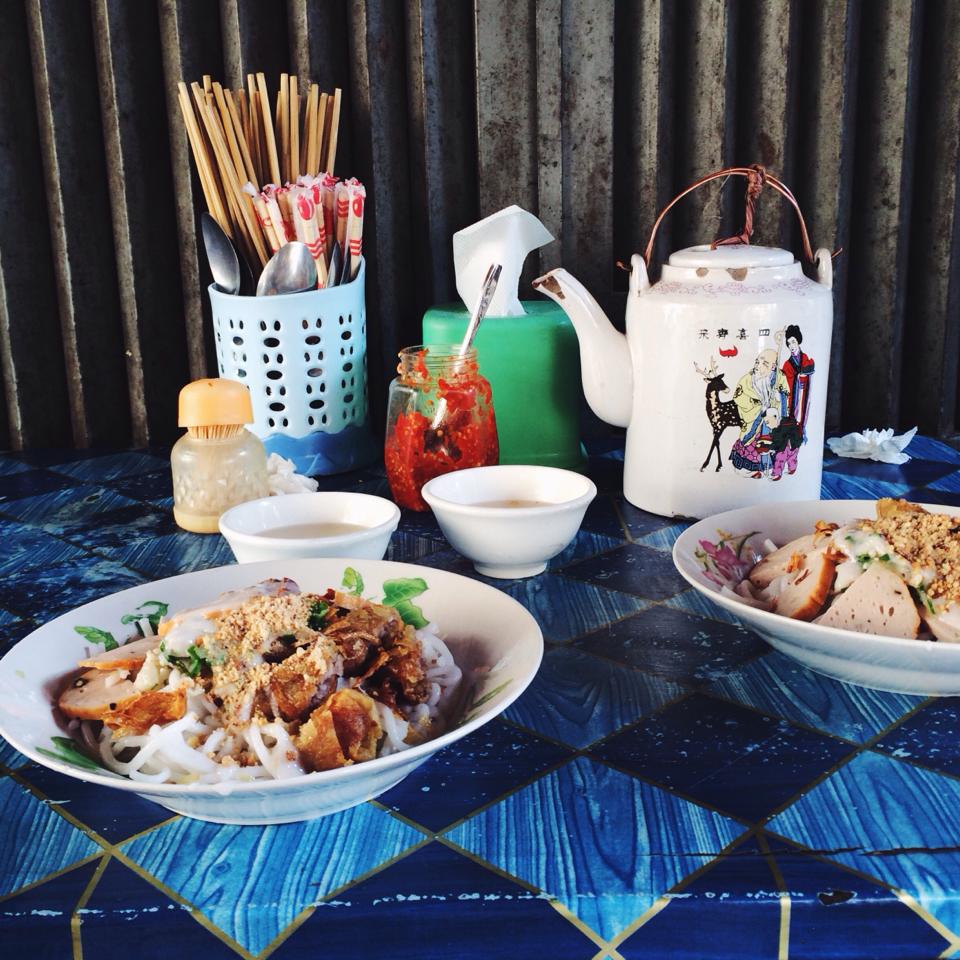
5. Don’t pick what you eat
Food in Southeast Asia.jpg
At the start of my backpacking trip, I had to spend double during meals because I hated those bean sprouts and raw vegetables that filled half the bowl, and I was always hungry. Think: Vietnamese Phở. After the first week, I’ve learned to stop picking at my food and I had my fill from finishing the ingredients I once disliked. After all, loving one’s food is part of understanding the culture.
If you have no dietary restrictions, go for the cheaper alternatives.
6. Set a budget every morning
After planning on the places you are going to visit, set aside money for respective transportations, entrance fees, necessities, and expenses. Trust me when I say the markets in Southeast Asia are infinite mazes. I found myself going in awe at the different products, ranging from intricate paintings to hand-sewn accessories to must-have elephant pants, and was tempted to bag them all home. While you should and can still enjoy despite travelling on a low budget, setting an expenditure ceiling every morning will increase your awareness in spending and prevent exceeding.
Given the exquisity of the goods and its relatively lower cost, you will find your wallet emptying out at an increasing pace if you don’t set yourself a budget everyday.
7. Know the different routes and local names to your destinations
routestodestinations.jpg
Most tourists see Southeast Asia as the paradise for taking Tuk Tuks or motorbike taxis at a negligible price. However, bear in mind that some of these tourist attractions are within walking distances or have shuttle buses to them.
When you have Wifi, or a map, note down the different possible routes and local names to your destinations. Save on Tuk Tuks and walk if possible. Also, knowing the local names to your destinations will save you the possibility of getting lost and the hassle of backtracking.
8. Avoid national and public holidays
hmongnewyear.jpg
Don’t have to be an economist to know the price relationship with demand and supply. Avoid cities during their public holidays, as prices of accommodations and transportations will multiple by folds and may sell out.
If the public holiday is your purpose of visit, make sure you reach the place before the actual day to avoid disappointment.

For more travel tips and articles, click here.
Thursday, 11 September 2014

Tips I wished I knew before backpacking Southeast Asia

Backpacking trip in Southeast Asia


No matter how often I travel, it's always difficult to accurately gauge what I will need on the trip or expect, to plan ahead. I believe there's nothing such as a bad adventure; it all depends on your level of preparedness and open-mindedness.

Many travellers flock to Southeast Asia each year and it is well-worn backpackers' circuit - a finite place with infinite surprises everywhere, like a treasure hunt. This means ignoring the lofty abstracts of reality back home and dealing with only tangible problems. How much should I spend on lunch? When will I leave this city? What is this person trying to sell to me? Though i got the ropes of travelling around this region after a while, it can still be stressful sometimes. Nonetheless, there is no pressure that I should be heading somewhere newer, pronto. Navigating similar hectic-ruleless roads everyday, I felt at peace.

Last winter, I bought a one way ticket and spent 6 weeks travelling overland through Vietnam, Laos, Thailand and Cambodia. Though I didn't have any elaborated plans, these are a few things I discovered and wish I knew before I embarked on my backpacking trip. 

Take overnight buses or trains whenever possible

First overnight train ride from Bangkok to Vientiane 

Southeast Asia is a region well-known for its cheap overland travels via trains and buses. Taking buses and trains throughout Southeast Asia is generally safe and also, one of the cheaper alternatives. You can drop at any station that interests you.

However, try to take the overnight transports as it saves more time; and money in the long run. You will not waste your supposed day-travelling time stuck on the train with a sore bottom and your accommodation for the night is sorted.

Overland travels take longer than expected


Though I can half-guarantee the safety of the overland travels in Southeast Asia, I can’t say the same for the time ticking away on your watch.

Personal experience: My supposedly 20 hours bus ride from Luang Prabang to Hanoi turned into a 28 hours ride; and 28 hours land travel from Siem Reap to Vientiane turned into a 40 hours journey.

Bring along sleeping bags


Napping on Hualampong Train Station in our sleeping bags
You would be thankful for this odd shaped object you hate at the start of the trip. Sometimes, you just want to nap on the floor of train stations or the hostel bedding pales in comparison to your hygiene standards, the sleeping bag is your safest bet. Or just keeping you warm on long bus rides.

Pack dry food

They are going to be your best friend. You can pack and reseal if you can’t finish them and it’s always handy for long overland travels with no stalls on the train or buses. Worse, if you have no local currencies.

I actually celebrated my 20th birthday with my last Milo Bar on an overnight train in Vietnam.

Lessen fibrous food intake


Forget all nutritionists’ advices on 2 servings of fruits and 2 servings of vegetables when you are spending much time on land. You would want to be embracing the beautiful sunsets and iconic attractions than beating Usain Bolt’s sprint timing to the toilet.

Classic medication

Being sick is the last thing you want to happen on the trip, but it’s not something that can be avoided sometimes. Sanitation and physical fatigue is not within our control. Be prepared for the unexpected. Pack insect repellent, paracetamol, charcoal pills. You will need the last one a lot.

I fell sick on the second day of my trip and I was thankful for the stash of Paracetamol brought along.

Habitual necessities


Pack tampons. Pack condoms. Habits and sizes don’t change immediately when you’re away from home.

Eat whatever you want

Bahn Mi for less than 1USD

Street side stall in Phnom Pehn

Best fried noodles at Siem Reap Central Market

The best food is those by the road side. Eat from a restaurant or road side. If you’re not well or used to the level of sanitation, either way, you’re going to be diarrheaing your way throughout.

Know how to use the squat toilets


All of us who are used to seated toilet bowls, start training your quads in the gym. Most toilets in Southeast Asia are still the traditional squat toilet; a hole in the floor. Hope this is not much a culture shock for many of you.

Be careful with hand gestures, not everything is universal


If you think that hand gestures will save from language-barrier embarrassments, don't. There’s a reason why different cultures exist. Your hand gestures may actually be something crude in someone else’s culture.

Personal experience: I learnt it the hard way. I was calling for bill the Singaporean way but left the eatery with “foreign intruders” sign labelled on me instead.

Use the local language


You will get more patience and endearment from the locals if you use their language; even if it’s just telling them you want rice.

Respect their cultures and people


Not knowing someone else’s culture is not an excuse to not be subscribing to their norms. Do your own research or ask about the cultural norms of the place.

Respect is a two way traffic. Although the Tuk Tuk touts can dampen your mood sometimes, remember, they are just trying to earn a living. A “no” with a smile is sufficient; you don’t have to be grumpily rude to them. 

Never be too one sided with politics or share too much about your history lessons

As a historian, I know how school textbooks always subscribe to the general schools of thought and always get excited when I visit places I study about. However, NEVER ever raise controversial political questions for the locals to answer. Also, never place your pre-conceptual ideas about their culture and practises. Be open to what they share with you even if it’s the best anti-thesis to your stand.

Have local currencies and spare US dollars


Vietnam Dong's landform against the real Halong Bay's landform
As much as guidebooks would tell you that all Southeast Asian countries accept American Dollars, it is only in Cambodia where there's an official monetary system. I had problems in Laos and Vietnam, so local currencies will be the most ideal.
However, change all your home currencies to American dollars as spare cash.

Call your bank before you fly


If you’re skeptical carrying too much cash on your backpack or hand carry, remember to call all the banks to activate your cards before you take off.

Learn how to use offline Google Maps and literal hard copy maps


Here’s one good hack for the road. I don’t usually buy local SIM cards when I travel so getting to places can be a challenge when they are not iconic sites.

Load offline Google Maps of the places you want to go when you have wifi and know the routes there. Google Maps loads the details of the city when you’re online and you can save up to 6 offline maps.
But if all online and offline maps fail, it is always good to know how to read hardcopy maps. Don’t have to be a geographer, but know how to navigate the different smaller lanes from big main roads.

Flexible to changes in your plans


Due to the delays or unexpected problems, we were constantly re-routing. While it is advisable to plan ahead, be flexible and do not be panicky when you have to change your plans. Be prepared to be constantly work around the amount of time and money you have.

Know your geography and travel routes well


That being said, know your geography and possible overland routes well. It will help you so much in planning your route. Although on the world map Laos shares a 2130 kilometers border with Vietnam on the east, Phonsavan is the only city that you can get to Vietnam from Laos, and vice versa.

Feel free to skip “mandatory” tourist attractions


Hmong New Year Celebrations in Laos
Lopburi Sunflower Fields
Cheap clubs and Elephant camps in Thailand, Vang Vieng’s Tubing in Laos, Pub Crawling in Cambodia. If such do not interest you, skip them. Just because they are all over in guidebooks or are considered the ‘must do’, do not compromise on your interests.

Personal experience: I skipped all these because travelling is more than just snapping photos of iconic structures and getting drunk. I headed to the off beaten tracks and joining locals for their events.

DO NOT bring all your almost-spoiling stuff


The pair of shoes on the left did not survive
I did not want to use all my fancier things for backpacking, and brought all the almost-spoiling things along so I could throw them away when I am done with the trip. This idea gave me more problems. Things starting falling apart and I had to spend more, getting ripped off in the cities.

Personal experience: My hand carry did not last more than 1 week.

Set a budget everyday


The cost of living is one of the main reasons Southeast Asia is a popular destination for backpacking. Most things are so affordable and yet exquisite you would want to pack everything into your backpack. But do remember, every cent count.
Set your budget low every morning, because you will exceed.

Almost everything is negotiable


As aforementioned, the costs of most things in Southeast Asia are cheap, but they can be cheaper. Thicken your skin and slash them prices. Every cent counts. A dollar off is a dollar saved for the next item.

Electronic copies of important documents


For your convenience and accessibility.

One set of fancy clothes and covered shoes


Dinner date up to mountains


No, backpacking is not all about looking bad and being dirty. There are instances you are in need of fancy clothes and covered shoes. Don’t have to pack your prom dress along, a sun dress would do the job.

Settle your first night accommodation in the new city


Guest house at Phonsavan Bus Terminal
I learnt this the hard way. Imagine the predicament I was in when my Couchsurfing host ditched my friend and I. It was midnight and we had nowhere to go.

Settle your first night of accommodation when going to a new city. On top of that, have their contact number and address ready at your disposal.

Staying cool when things go wrong


These are desperate times when you’ve to flip through all the “keep calm and xxx” quotes.

Personal story: I nearly got raped when I was at the toilet but keep your cool; THINK of solutions.

Take sufficient photos


Wat PaHa Temple of Chiangmai
SaigonNotre Dame Basilica
Flipping through your travel photos is the best way to relive the experience. Yes, you do not want to be the annoying travellers snapping at everything. But you would not want to beat yourself when you’re home without enough pictures.
Despite the lacking memory space in my phone and already backed-up photos in my laptop, I could never bring myself to delete these photos from my phone. Long bus rides, sleepless nights, my best source of entertainment.

Back up your photos


Bayon Temple
Taking photos is one thing. Having them saved is another. 

Follow your heart; take a break when you need to


Coffee Break at Ham Tu Quan, Hanoi, Vietnam

Trust your instincts; trust your heart. When you’re tired and just want to stay in, do it. If you have that inner urge to buy something, buy it. Travelling is not a competition on the number of attractions you check off, but a better understanding of yourself. Take a break whenever you need to. Cup of coffee to gather your thoughts, sounds good?

Severe withdrawal symptoms strikes!!!


Home to Changi Airport with my best friend, my mother
Nothing beats comfort and familiarity of home.

But let me warn you, withdrawal symptoms will be severe after a long time on the road. Because ultimately, home is where the heart is.

---


Whether you get your tips and knowledge from guidebooks, websites or first-hand experiences, these are the life lessons that will stay with you. After this 6 weeks-long backpacking trip around Southeast Asia, I felt myself growing into a better individual I am more in love with. Okay, I have to admit that I spent heaps of time trying to gain back my lost-ass and my cracked skin, but it was such adrenaline that fed my soul.


It's a big playground out there - picturesque places, lovable people, food you'll drool uncontrollably over, and beauty of other cultures. Start playing!